Despite reports of its demise, email continues to beat out emerging social media channels such as Twitter and Facebook as the favorite way to share information with colleagues and friends, according to a study from ShareThis.
Nearly one-half (46%) of content-sharing activity initiated comes via email, another 33% from Facebook, and 14% from other channels, such as Digg, Delicious, and LinkedIn. Only 6% of shared content comes via Twitter.
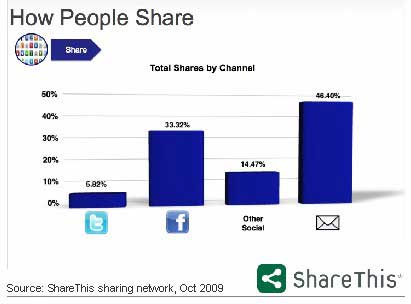
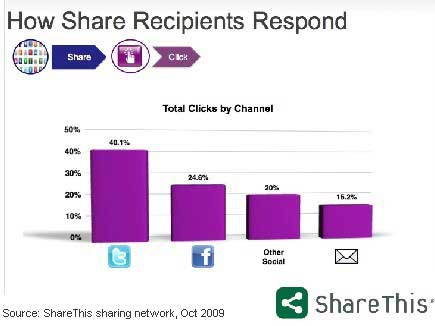
Once content is shared, however, responses among channels vary. While Twitter trails as a recipient of shared content, users tend to have higher click-through rates: 40% of clicks come from shared articles on Twitter, 35% from email and other social channels (combined), and 25% from Facebook.
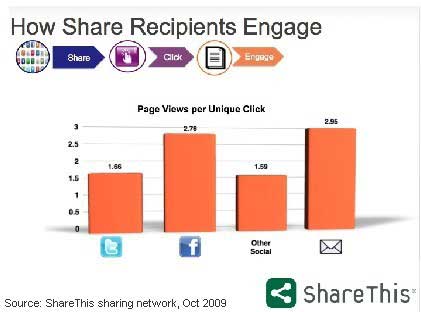
User engagement by platform––what happens after a user arrives to the share destination––also varies, with Twitter the least engaging share platform:
- Email users visit on average 2.95 pages when they click through to a site.
- Facebook users visit 2.76 pages.
- Twitter users visit 1.66 pages.
Looking for real data that can help you match social media tools and tactics to your marketing goals? The State of Social Media Marketing, an original research report from MarketingProfs, gives you the inside scoop on how more than 5,000 marketing pros are using social media to create winning campaigns, measure ROI, and reach audiences in new and exciting ways.
About the data: The findings are compiled by Share This from information gathered across 125,000+ sites in its network and are as of October 2009.